

The Corps of the Bare-Boned Plane
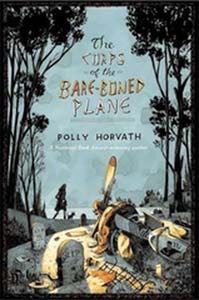 When an accident leaves teenage cousins Meline and Jocelyn parentless, they come to live with their unknown and eccentric Uncle Marten on his private island.
They soon discover that the island has a history as tragic as their own: it was once an air force training camp, led by a mad commander whose crazed plan to train pilots to fly airplanes without instruments sent eleven pilots to their deaths.
Jocelyn, Meline, and Uncle Marten are soon joined on this island of wrecked planes and wrecked men by an elderly Austrian housekeeper, a very mysterious butler, a cat, and a dog. But to Jocelyn and Meline, being in a strange new place around strange new people only underscores the fact that the world they once knew has ended.
Reviews
"Horvath's exploration of the nuances of grief is pitch perfect."—Booklist
"Richly idiosyncratic writings."—Booklist
"A gripping, chilling tale perfect for leisure readers who demand action and insight"—Children's Bookwatch
"Readers will sink deeply into the story."—Kirkus Reviews
"A remarkable examination of the extremes of emotional distress."—The Horn Book
"Horvath is a gifted writer."—School Library Journal
"Horvath's prose has rarely been more incisive: she understands the workings of grief and conveys them with uncanny accuracy and sympathy."—Publishers Weekly
"This haunting story is balanced with the author's usual detached and quirky humor . . . Taut and weird and sad and funny."—The Bulletin for the Center of Children's Books